


There is something about grief that can be deeply misleading — both to the grieving person and to everyone around them.
From the outside, someone may look like they are coping. They get up. They go to work. They answer emails. They make dinner. They host people. They keep things moving. Life continues.
But underneath, an entirely different reality may be unfolding. Because functioning is not the same as coping.
And in grief, functioning can take an extraordinary amount of energy.
Recently, I witnessed this very clearly while supporting a mother and her son after they had lost a son and brother to suicide. What I saw was a powerful reminder of how deceptive grief can be in its early stages — and the toll it takes to "look fine".

The Body's First Response: Numbness and Shock
In the early days and weeks after a profound loss, the body often does something remarkable: it protects us. When emotional pain is too overwhelming to fully feel, the nervous system can create a state of numbness or shock.
This is not denial. It is survival. It allows us to keep going when the full weight of reality might otherwise feel unbearable.
People in shock often continue through life almost mechanically — making phone calls, organising funerals, dealing with paperwork, returning to work, caring for others. To outsiders, this can look like extraordinary strength. But often it is simply protection. The emotions have not disappeared. They have been muted because the system cannot yet safely process them.
This is why so many grieving people later say: "I thought I was doing okay… and then months later it all hit me."
It did not come out of nowhere. It was there all along. The numbness was simply holding it back.
During the week I spent with this family, I hardly saw the mother cry — only briefly, when speaking about certain memories of her son that slipped past the protective layer of shock. No wailing. No collapse. No huge visible grief waves. From the outside, many would say she was "coping well".
But as a widow myself, I recognised what her body was trying to do – protecting her from the full impact at all cost.
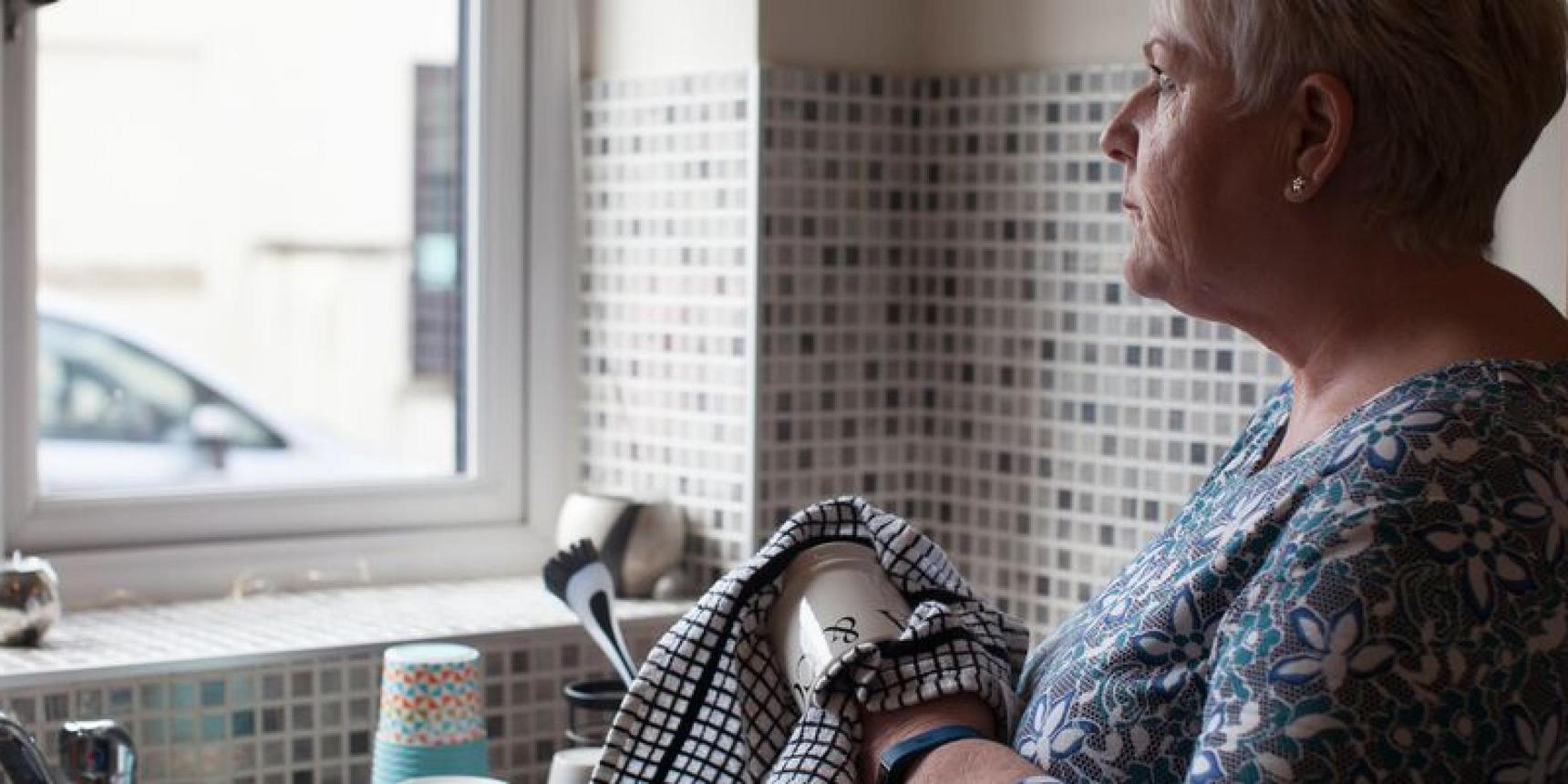
The Energy Cost of Looking "Okay"
One of the hardest parts of grief is the invisible energy it takes to appear functional.
To answer questions. To make decisions. To remain polite. To keep commitments. To regulate emotions. To be present for other people.
Every one of these things costs energy. And grief drastically reduces the amount of energy we have available.
As my own bereavement counsellor once told me: "We all turn into energy vampires — taking energy from other people because there's little to none left in our own body."
That stayed with me because it explains so much. Grief creates an exhausting mismatch: high external demand, low internal capacity. And this mismatch can continue for months. Often the real exhaustion only becomes visible later — usually around the six-month mark — when all the hidden emotional labour, suppression, and survival have quietly drained the system.
What follows is often profound depletion. Not just tiredness. Nervous-system exhaustion. Sometimes burnout.
This is why someone can spend an entire day "doing normal life" and then collapse into silence, irritability or emotional shutdown by evening. It is because surviving the day has taken everything. There is no reserve left.

When Grief Comes Out as Anger
Not all grief looks like sadness. Often grief comes out as anger. People can carry enormous pain quietly for weeks, only for it to erupt suddenly and seemingly out of nowhere.
I witnessed this too. The older brother had gone back to work far too soon. He was managing an important project, dealing with all the inevitable stress that came with it, inviting family for dinner, and carrying the unspoken belief that he also had to look after his grieving mother. From the outside, he looked functional. Capable. Responsible. But underneath, he was overwhelmed.
Everything had seemed fine the evening before — we had all spent time together, and to any observer it had been a good evening. But the next morning, his mother received a phone call. Accusations, out of nowhere, from her son. She was bewildered and deeply hurt. She had done nothing to deserve this. In fact, she'd done her best to be there for her older son after losing her younger one.
The same happened again after another dinner party where the mum, this time pre-warned, had done her very best to not offend her son in any way.
Because I had been there both times, I could see clearly what was happening. She had simply become the trigger; whatever she said was landing badly. It was grief breaking through — pressure, pain, exhaustion, emotional overload, and old wounds that had no other outlet than the one person the son felt safest with.
Sometimes the people we love most become the safest place for our grief to erupt — not because they caused it, but because some part of us knows they will still love us afterwards. That does not make it less painful. But it can help make sense of it.

When Parents Become the Emotional Container
For parents, this can be especially devastating. A grieving mother is already carrying the unbearable pain of losing one child - imagine what it feels like to be pushed away, blamed, or attacked by the child she has left.
It can feel like another heartbreak. And often, she does not understand what she has done wrong.
But sometimes the surviving child is not truly angry with the parent in front of them. Sometimes they are angry at the parent who is absent — emotionally unavailable, disconnected, or dead. And the parent who remains becomes the emotional stand-in.
This is one of grief's cruellest dynamics. Messy. Unfair. Often deeply unconscious. Without support, families can become trapped in these painful patterns without understanding what is really happening.
Why Early Grief Support Matters So Much
One of the hardest realities for many bereaved families is that even where support exists, it is not always immediate, specialised, or easy to access — especially after traumatic loss.
In some countries, support has improved significantly. In others, families may still struggle to find appropriate help close to home, even in densely populated areas. And this matters. Because the earliest days and weeks after loss are often the most volatile.
Shock, numbness, practical demands, emotional overwhelm — all of it can create an intensely fragile family system where people are simply trying to survive without understanding what is happening inside them.
I have seen firsthand how quickly grief can strain even the deepest family bonds — not because of lack of love, but because pain has nowhere safe to go. A son lashes out at his mother. A mother misreads withdrawal and overwhelm as rejection. Both are hurting. Neither fully understands that the other is in survival mode.
This is why early grief support matters so much. Not months later, once life has outwardly stabilised. Not when relationships have already been damaged. From the very beginning.
What many bereaved people need in those first days is almost a crash course in grief: what shock feels like, why numbness happens, why anger can suddenly erupt, why concentration disappears, why relationships can become strained — and why none of this means they are doing grief "wrong". Because understanding grief early can prevent unnecessary damage at a time when families are already carrying more than enough.

What to Remember
If someone you love looks like they are coping after a profound loss, do not assume they are okay.
And if you are the one functioning, working, organising, showing up, getting through the days — while feeling strangely numb — do not mistake that numbness for healing.
Shock can protect us. Numbness can protect us. Busyness can protect us. But they are not the end of grief. Often they are only the beginning.
Because grief does not disappear. It waits.
And when the body finally feels safe enough to feel — when the veil of shock begins to thin — grief can arrive with the full force of everything we were too overwhelmed to feel at the start.
That is not failing. That is often where the real work of grief begins.
Further Support & Reading
If you are looking for structured support to help process grief, the Grief Recovery Method offers a step-by-step approach that I myself have found extremely helpful, especially in the first few months after losing my husband. It is most effective when guided by someone trained in the method, rather than trying to work through it alone.
👉 You can find trained Grief Recovery Specialists here.
• The Grief Recovery Handbook — the foundational guide to the Grief Recovery Method, written for adults navigating loss of any kind.
• When Children Grieve — for parents, teachers and caregivers supporting children through loss.